Instrumented Into Debt: When Observability Spending Outgrows the Problems It Was Built to Solve
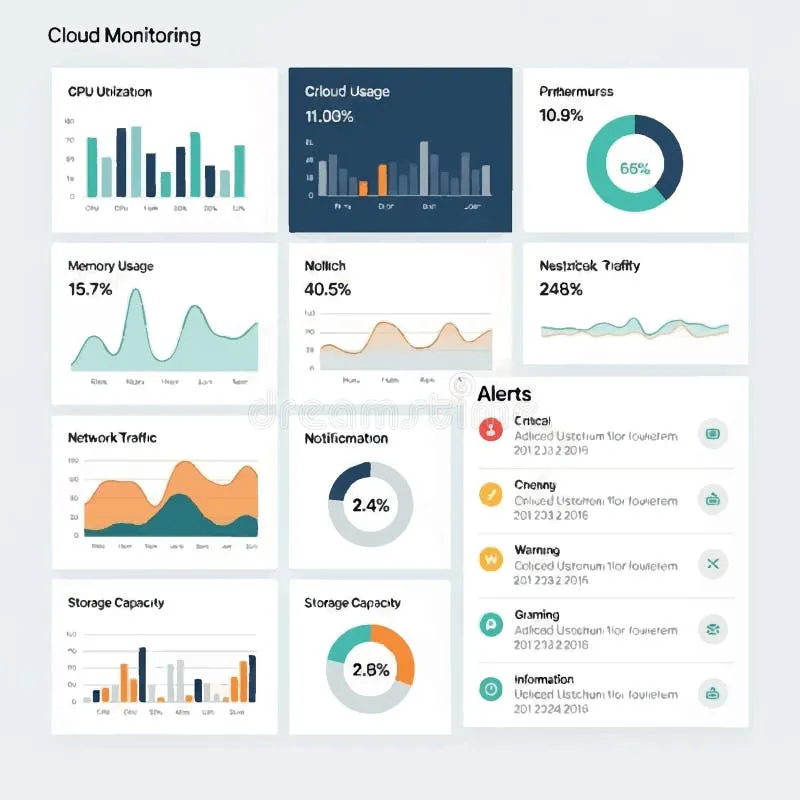
Photo: enterprise monitoring dashboard data visualization cloud operations center, via thumbs.dreamstime.com
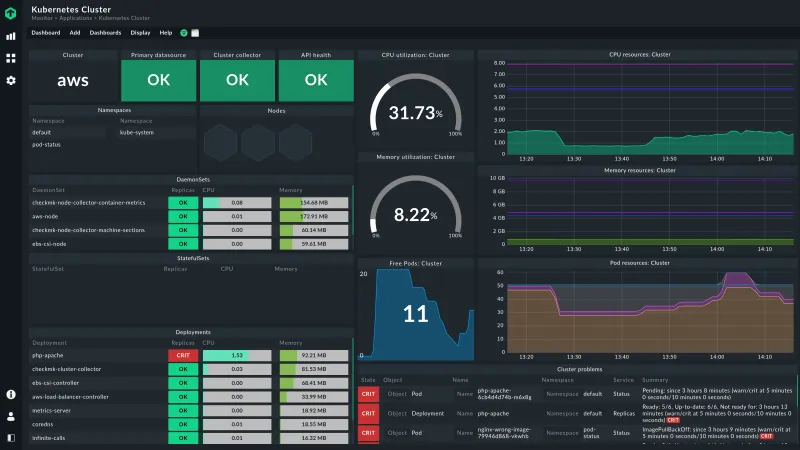
There is a moment familiar to many engineering leaders at US enterprises—the quarterly cloud cost review where the line item for observability tooling lands with an uncomfortable thud. What began as a Datadog trial, a Splunk license expansion, or a New Relic enterprise agreement has compounded through feature adoption, data volume growth, and per-seat expansions into a figure that prompts genuine strategic reconsideration. In some organizations, observability now costs more than the compute infrastructure it monitors.
This is not a failure of procurement discipline, though procurement discipline would help. It is the predictable outcome of a decade-long trajectory in which observability moved from optional enhancement to architectural necessity—and vendors priced their products accordingly. The question worth asking now is whether the operational intelligence enterprises are purchasing justifies the investment, or whether the industry has collectively arrived at a place where the act of observing has become as expensive and complex as the systems being observed.
How Observability Became Non-Negotiable
The shift was gradual and, in retrospect, largely inevitable. As enterprises adopted microservices architectures, containerized deployments, and multi-region cloud infrastructure, the complexity of understanding system behavior in production expanded faster than traditional monitoring approaches could accommodate. A monolithic application with a handful of external dependencies could be monitored with basic metrics and log aggregation. A distributed system with hundreds of services, ephemeral containers, and asynchronous event flows requires something fundamentally different.
Observability platforms—built around the pillars of metrics, logs, and distributed traces—offered a coherent answer to that complexity. The ability to correlate a latency spike in a user-facing API with a specific database query across a chain of service calls was not a luxury in these environments; it was a prerequisite for operating them reliably. Vendors built compelling products, and enterprises adopted them at scale.
The commercial consequence of that adoption is that observability vendors now occupy a position of structural leverage in enterprise infrastructure stacks. Migrating away from a deeply integrated observability platform is a significant engineering undertaking, which means renewal conversations happen in the context of high switching costs rather than competitive evaluation. Pricing power follows.
The Data Volume Problem and Who Benefits From It
Most enterprise observability platforms price on data ingestion volume, retention duration, or some combination of both. This creates an incentive structure that deserves scrutiny. As cloud architectures grow more complex and instrumentation becomes more granular, data volumes increase—and the cost of observability scales accordingly, often faster than the underlying infrastructure it covers.
The critical question is whether incremental data volume produces incremental operational value. The honest answer, for most organizations, is that it does not scale linearly. The first instrumentation layer—service-level metrics, error rates, latency distributions, basic distributed traces—produces substantial operational value. Each subsequent layer of granularity produces diminishing returns in actionable insight while continuing to produce proportional increases in licensing cost.
Engineering teams, incentivized to instrument thoroughly and operating under the reasonable assumption that more data is better than less, often instrument everything that is technically instrumentable. The result is dashboards populated with thousands of metrics, log streams generating terabytes per day, and trace volumes that require their own sampling strategies to remain financially manageable. The signal is present somewhere in that data. The challenge is that the volume has grown to the point where finding it requires the same kind of sophisticated tooling that was supposed to make finding it unnecessary.
The Alert Fatigue Corollary
Observability debt manifests operationally as alert fatigue—a condition so widespread in US enterprise engineering organizations that it has become a normalized feature of on-call culture rather than a recognized failure mode. When monitoring systems generate more alerts than teams can triage meaningfully, the rational response is to raise alert thresholds, mute noisy monitors, or develop an informal prioritization heuristic that is never formally documented.
Each of these adaptations reduces the effective sensitivity of the observability investment. An organization paying seven figures annually for observability tooling, whose on-call engineers have learned to treat a significant proportion of alerts as background noise, is not observing its infrastructure—it is maintaining the appearance of observing it while its actual operational intelligence depends on the informal pattern recognition of experienced individuals who have learned to read the noise.
This is a meaningful distinction. The value proposition of enterprise observability is systematic, scalable insight that does not depend on institutional knowledge concentrated in specific individuals. When alert fatigue forces teams back toward informal expertise as the primary detection mechanism, the observability platform is delivering less than its cost implies.
A Cost-Normalized Approach to Instrumentation Decisions
The corrective is not to abandon observability investment. Systems of meaningful complexity genuinely require sophisticated monitoring, and the operational cost of flying blind through a production incident in a distributed architecture is real and quantifiable. The corrective is to apply the same economic discipline to observability decisions that enterprises apply to other infrastructure investments.
Cost-normalized instrumentation begins with a clear definition of what the organization actually needs to know about its systems to operate them reliably—not what it would be theoretically interesting to know, but what information is genuinely required to detect, diagnose, and resolve the failure modes that matter. From that definition, instrumentation decisions should be evaluated against their cost per actionable insight rather than their cost per data point.
Practically, this means establishing explicit retention policies based on operational utility rather than default platform settings. It means auditing existing instrumentation regularly to identify metrics and log streams that are ingested but never queried in incident response. It means evaluating whether sampling strategies for high-volume trace data can be tightened without reducing diagnostic coverage for the failure scenarios that actually occur.
It also means resisting the feature expansion pressure that observability vendors apply through product roadmaps. AI-assisted anomaly detection, synthetic monitoring suites, and real user monitoring are legitimate capabilities with genuine use cases. They are also incremental revenue opportunities for vendors, and their value should be evaluated against specific operational problems rather than adopted as general improvements to observability posture.
Observability as Infrastructure, Not Insurance
The framing that has allowed observability costs to grow unchallenged in many enterprise budgets is the framing of observability as insurance—a cost whose value is realized in the incidents it prevents or accelerates resolution of, making it difficult to evaluate against a counterfactual. This framing is not wrong, but it is incomplete.
Observability is also infrastructure, and infrastructure investments should be evaluated on utilization, efficiency, and return. An organization spending more on observability than on the compute it monitors, without a clear accounting of how that spend translates to reduced mean time to resolution, prevented revenue loss, or improved deployment confidence, has allowed a tool category to escape the economic scrutiny applied to every other line item in the infrastructure budget.
Scaling digital operations requires clear, actionable visibility into system behavior. It does not require instrumenting every possible signal at maximum resolution and retaining it indefinitely. The discipline of knowing what to measure, at what granularity, and for how long is not a cost-cutting exercise. It is the difference between observability that serves the engineering organization and observability that the engineering organization serves.