Global Reach, Fractured Responsibility: Solving the Ownership Crisis in Multi-Cloud Content Delivery

Photo: Vivereb, CC BY 4.0, via Wikimedia Commons
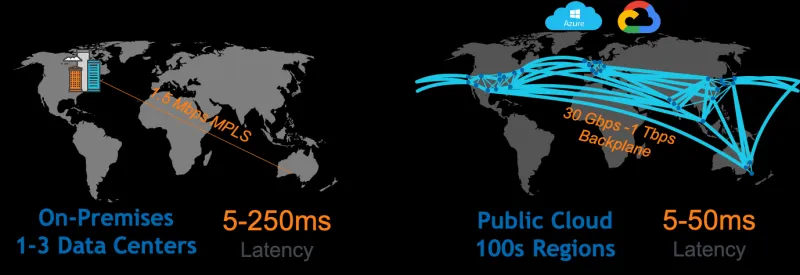
The promise of multi-cloud content delivery is seductive in its simplicity: put your content everywhere, reach everyone, eliminate single points of failure. For enterprises with global audiences, the case practically makes itself. What the architectural diagrams rarely illustrate is the organizational consequence of distributing delivery across four cloud providers, a dozen edge networks, and three internal teams—each of whom believes, with some justification, that someone else owns the problem.
This is the accountability crisis that has quietly taken root inside some of the most sophisticated content delivery architectures in the US market. The infrastructure is genuinely impressive. The ownership structure is genuinely broken.
When the Blame Distributes as Fast as the Content
Multi-cloud content delivery failures have a particular character. They rarely announce themselves with a single, obvious point of collapse. Instead, they manifest as degraded experiences in specific geographies, intermittent latency spikes in certain CDN regions, or cache inconsistencies that appear only under specific traffic conditions. Diagnosing these failures requires correlating telemetry across systems that were built by different vendors, operated by different teams, and instrumented according to different conventions.
When an incident occurs in this environment, the organizational response frequently mirrors the architectural complexity. The CDN team points to the origin infrastructure. The cloud infrastructure team points to the network configuration. The network team points to the CDN routing policy. Meanwhile, the end user in Phoenix or Atlanta or Seattle is watching a buffering spinner while three teams exchange tickets.
A large US-based streaming platform experienced exactly this dynamic during a high-profile live event in 2023. A latency issue affecting viewers in the southeastern United States took four hours to resolve—not because the technical fix was complex, but because identifying which layer of a five-vendor delivery stack had introduced the degradation required coordinating three internal teams and opening support cases with two external providers simultaneously. The technical resolution took eleven minutes. The accountability process took four hours.
The Architectural Root of the Ownership Problem
Multi-cloud delivery architectures are typically assembled incrementally. An organization starts with a primary cloud provider and a CDN layer. It adds a secondary cloud region for redundancy. It integrates an edge computing platform for latency-sensitive workloads. It layers in a third-party security provider for DDoS mitigation. Each addition is rational in isolation. The aggregate is a system that no single team has full visibility into and no single team is accountable for end-to-end.
This is not a failure of intention. It is a predictable consequence of how enterprise technology organizations are structured. Teams are organized around technologies, not outcomes. The CDN team owns CDN performance. The cloud infrastructure team owns cloud infrastructure health. No one owns the user experience as it traverses the full delivery chain from origin to endpoint.
When delivery quality degrades, the gap between those team boundaries is where accountability falls.
Building Accountability Chains That Match Delivery Architecture
Addressing this requires organizations to make a deliberate structural choice: accountability must be organized around delivery outcomes, not infrastructure components.
The most effective model emerging in practice is the designation of what some organizations are calling a Delivery Experience Owner—a role or team explicitly chartered to own end-to-end delivery quality regardless of which underlying systems are involved. This is distinct from a traditional SRE function, which typically owns reliability within a defined system boundary. The Delivery Experience Owner has a mandate that crosses system boundaries by design.
This role requires two organizational prerequisites. First, unified observability that aggregates telemetry from all delivery layers into a single operational view. Without this, the Delivery Experience Owner cannot actually see the full delivery chain. Second, formal escalation authority that allows this role to engage any team in the delivery stack during an incident without routing through standard ticket queues.
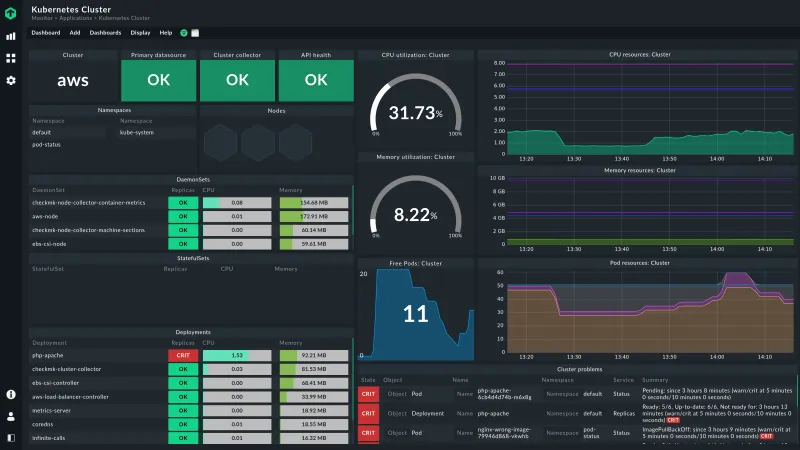
Several large US media enterprises have begun implementing this model. One national broadcaster restructured its delivery operations in early 2024, consolidating multi-cloud telemetry into a unified delivery health dashboard and assigning a dedicated delivery operations team with cross-vendor escalation authority. Mean time to resolution for delivery incidents dropped by fifty-eight percent within the first quarter.
Contractual Accountability Across Vendor Boundaries
Organizational restructuring addresses internal accountability gaps, but multi-cloud delivery also involves external vendors whose contractual obligations are rarely aligned with end-to-end delivery outcomes. Most CDN and cloud provider SLAs are written around component-level availability—uptime for the CDN, availability for the compute layer—rather than user-facing delivery quality.
Enterprises building serious multi-cloud delivery strategies should be negotiating outcome-oriented SLAs wherever possible, and where that is not achievable, constructing internal measurement frameworks that translate component-level metrics into delivery experience metrics. The question to answer is not whether the CDN was available, but whether the user in Dallas received the content within acceptable parameters. Those are related but distinct questions.
Designing for Accountability from the Start
For organizations still in the architecture phase of their multi-cloud delivery buildout, the governance design deserves as much attention as the technical design. Before adding a new cloud region or edge provider, the relevant questions are not only about performance and cost. They are: Which team will own this layer's contribution to delivery quality? How will telemetry from this system be integrated into our unified delivery view? What is the escalation path when this system contributes to a user-facing incident?
Answering those questions before deployment is substantially easier than answering them during an incident at two in the morning.
Global content delivery is a genuine competitive advantage for enterprises that execute it well. But delivering everywhere is only half of the equation. Knowing who is responsible for that delivery—at every layer, across every vendor, at any hour—is what separates a resilient delivery architecture from an expensive liability.