Redundancy by Illusion: How Multi-Cloud Architecture Quietly Became Your Biggest Operational Liability
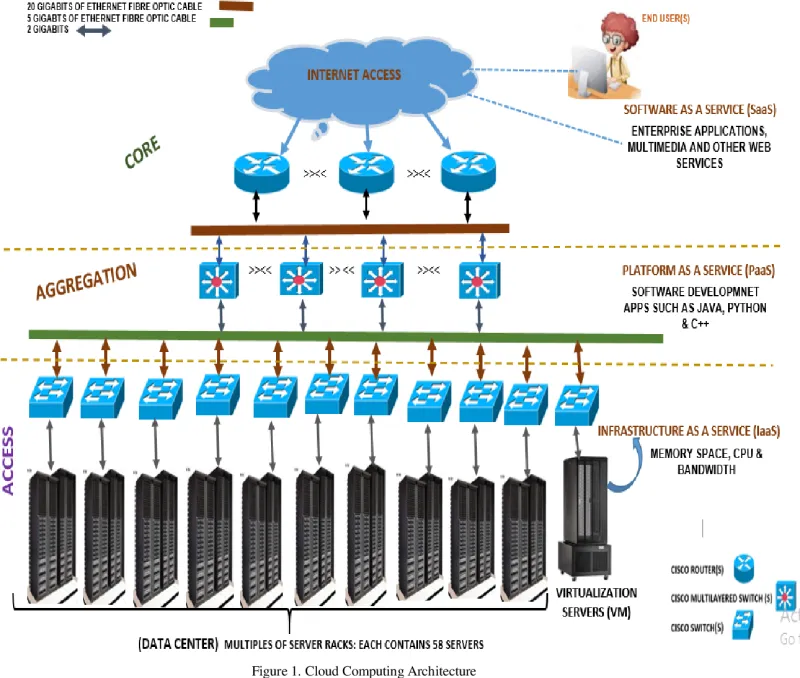
Photo: enterprise cloud infrastructure network diagram multiple servers data center, via d3i71xaburhd42.cloudfront.net
The pitch is compelling enough to survive almost any budget review. Spread your workloads across two or three cloud providers, the reasoning goes, and you insulate the business from catastrophic outages, negotiation leverage evaporates, and no single vendor can hold your operations hostage. Multi-cloud has become, for many US enterprises, the infrastructure equivalent of diversified investing—a seemingly rational hedge that signals strategic sophistication.
The problem is that most multi-cloud deployments are not functioning as resilience engines. They are functioning as complexity amplifiers. And the gap between what these architectures promise on paper and what they deliver under operational pressure is widening in ways that most organizations are not measuring honestly.
The Vendor Lock-In Argument Does Not Hold the Way Enterprises Assume
The foundational case for multi-cloud rests on portability—the belief that distributing workloads across AWS, Azure, and Google Cloud simultaneously preserves the freedom to shift capacity and negotiate from a position of strength. In practice, portability is almost immediately compromised by the gravitational pull of proprietary services.
The moment an engineering team integrates a managed database offering, a serverless compute layer, or a native AI service from any single provider, they have accepted a degree of lock-in that no amount of Kubernetes abstraction fully eliminates. Data egress costs, API incompatibilities, and behavioral differences between equivalent services across platforms mean that theoretical portability rarely survives contact with production requirements. The enterprise believes it is hedging. What it has actually done is accept the operational burden of multiple environments while retaining the dependencies of each.
A 2023 survey by Flexera found that 87 percent of enterprises reported a multi-cloud strategy, yet fewer than a third had successfully executed a live workload migration between providers. The strategy exists. The capability, in most cases, does not.
Failover Is Not a Feature. It Is an Engineering Discipline.
When an organization declares that its multi-cloud deployment provides automatic failover, the declaration should be interrogated rather than accepted. Failover across cloud providers is not a configuration setting—it is a sustained engineering investment that requires consistent testing, data replication strategies that tolerate latency and consistency tradeoffs, and runbooks that have been validated under realistic failure conditions.
Most enterprises have not done this work. They have provisioned infrastructure across multiple clouds, configured routing rules that look correct in a dashboard, and assumed that geographic and vendor distribution constitutes resilience. It does not. Resilience requires that every failure scenario has been modeled, tested, and assigned a recovery time objective that the business has explicitly accepted.
The practical consequence of untested failover is that during an actual outage—precisely the moment when multi-cloud architecture is supposed to demonstrate its value—teams discover that data replication has drifted, that authentication dependencies are concentrated in the primary provider, or that the secondary environment has not been maintained at production parity. The fallback strategy fails. The enterprise now faces both an outage and an incident response process operating without a reliable secondary path.
Cost Optimization Across Providers Is a Full-Time Job Most Teams Cannot Staff
Multi-cloud proponents frequently cite cost arbitrage as a secondary benefit—the ability to route workloads to whichever provider offers the most favorable pricing at a given moment. This is a legitimate theoretical advantage. It is also an operational requirement that demands dedicated FinOps expertise, continuous monitoring, and tooling investments that carry their own licensing costs.
The financial reality of most multi-cloud deployments is that they cost more than a well-optimized single-provider architecture. Duplicated tooling, redundant networking costs, separate support contracts, and the engineering hours required to maintain consistency across environments accumulate quietly. Organizations that benchmark their multi-cloud spend against a hypothetical single-provider baseline almost universally find that the premium is larger than anticipated—and that the resilience justifying that premium has never been formally validated.
The Organizational Theater Problem
There is a cultural dimension to multi-cloud adoption that deserves candid examination. For many enterprises, a multi-cloud strategy functions primarily as a signal—to boards, to regulators, to enterprise customers with their own vendor risk requirements—that the organization has taken infrastructure resilience seriously. The strategy satisfies a compliance checkbox or a procurement questionnaire without necessarily producing the operational capability those documents are attempting to verify.
This is not a criticism of the individuals who build and maintain these environments. It is an observation about how infrastructure decisions get made when procurement cycles, vendor relationships, and executive narratives exert more influence than operational evidence. The result is that significant engineering capacity is absorbed by the maintenance of architectures whose resilience properties have never been tested at the moment they would matter most.
A Framework for Honest Assessment
Not every multi-cloud deployment is organizational theater. There are workloads and organizational contexts where distributing across providers produces genuine, measurable resilience—particularly for enterprises with the engineering depth to maintain environment parity, the FinOps maturity to manage cross-platform cost optimization, and the operational discipline to run regular failover drills.
The question enterprises should be asking is not whether multi-cloud is a good idea in the abstract. The question is whether their specific organization has the capacity to operate a multi-cloud architecture in the way that its resilience claims require. That assessment should begin with three honest inquiries.
First: Has the failover path been tested under production load in the last ninety days? If the answer is no, the failover path should not be cited as a resilience asset.
Second: Does the organization have a dedicated team responsible for cross-cloud cost optimization, or is that responsibility distributed across teams that treat it as secondary work? If the latter, the cost arbitrage argument should be treated with skepticism.
Third: Are the workloads designated for secondary providers genuinely portable, or do they carry dependencies on primary-provider services that would require significant re-engineering to migrate? If re-engineering is required, the portability argument requires qualification.
Building Resilience That Survives Contact With Reality
The goal of infrastructure resilience is not architectural complexity—it is the reliable continuation of business operations under adverse conditions. For some enterprises, a rigorously operated single-provider deployment with mature disaster recovery practices will deliver more genuine resilience than a multi-cloud architecture maintained at the margins of the team's operational capacity.
Elastic infrastructure strategy should be evaluated on outcomes, not configurations. The most defensible position is not the one that looks most sophisticated in a vendor briefing. It is the one that has been tested, documented, and validated against the failure scenarios the business actually cannot afford.